
Why Some Facelifts Last a Decade While Others Fade in Five Years
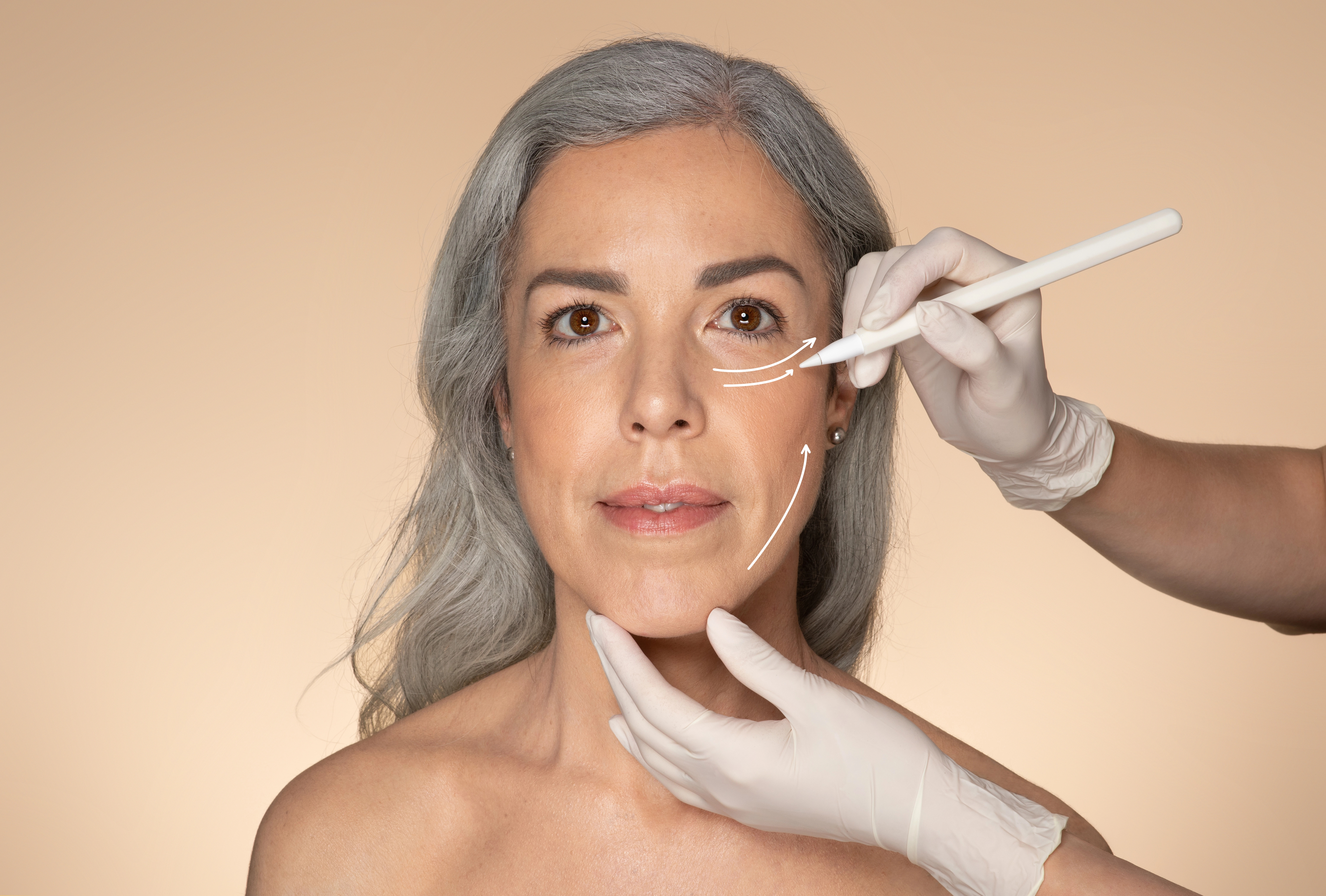
When researching facelift procedures, you'll encounter wildly different claims about how long results last. Some surgeons cite 5 to 7 years as typical. Others mention 10 to 12 years. A few claim their techniques can last 15 years or longer.
These aren't just marketing differences. The durability of facelift results depends fundamentally on which tissue layers are addressed, how those tissues are repositioned, and where the mechanical load of the lift is placed. Two procedures that both carry the label "facelift" can produce results that age at dramatically different rates.
Understanding why some techniques create more durable outcomes than others helps you evaluate surgical approaches and set realistic expectations for your own results. More importantly, it reveals which questions to ask during consultations to determine whether a proposed technique is likely to provide the longevity you're seeking.
The difference between a facelift that lasts 7 years and one that lasts 15 isn't random variation or individual healing. It's the direct result of surgical methodology and anatomical principles.
The Fundamental Problem: Where Does the Load Live?
Every facelift must counteract gravity's downward pull on facial tissues. The critical question is: which layer bears the weight of that correction?
In engineering terms, this is about load distribution. When you lift something heavy, you need a structure strong enough to support it over time. Use a weak support system, and the structure will eventually fail under the load. Use a robust foundation, and the system remains stable for decades.
Facial tissues work the same way. Some layers are designed to bear mechanical stress. Others aren't. The durability of facelift results depends largely on whether the surgeon places the lifting load on tissues capable of supporting it long-term.
Skin is not designed to bear load. It's an organ of sensation, protection, and expression. While skin has some elasticity, it's relatively thin and stretches easily under sustained tension. When a facelift relies primarily on skin tightening to hold tissues in their lifted position, that tension gradually overcomes the skin's limited structural capacity.
Over months and years, the skin stretches. Scars widen slightly. The lifted tissues begin to descend again as the skin yields to the constant gravitational pull. Within 5 to 7 years, much of the original correction has faded, and the face looks aged again.
This is why traditional skin-based facelifts, while they can produce immediate improvement, tend to have limited durability. The results look good initially, but the fundamental problem is that skin simply cannot maintain the correction over time.
In contrast, the deeper structural layers of the face are designed to support mechanical load. The SMAS (superficial musculoaponeurotic system) is a fibrous layer that connects to facial muscles and ligaments. The periosteum is the tough membrane covering the bone surface. These tissues have much greater tensile strength than skin and can maintain their position under sustained stress.
When a facelift repositions tissues at these deeper levels and secures them there, the load is distributed across structures capable of bearing it. The skin simply drapes over the corrected foundation without tension. This fundamental difference in load distribution explains why deep structural techniques produce significantly longer-lasting results than superficial approaches.
Structural Repositioning vs. Surface Tightening
The distinction between structural repositioning and surface tightening represents the core difference between facelifts with 7-year results and those with 15-year results.
Surface tightening approaches work by excising excess skin, pulling the remaining skin tighter, and closing the incisions. The SMAS may be addressed with plication (folding and suturing) or limited elevation, but the primary correction comes from skin removal and tension.
These techniques can certainly improve appearance. The face looks smoother and tighter immediately after surgery. However, because the deeper tissues haven't been meaningfully repositioned, they continue to descend over time beneath the tightened skin. As this descent continues and the skin gradually stretches, the initial improvement fades.
Deep plane facelift techniques and other structural approaches work differently. The surgeon releases the deep tissues from their descended position, physically moves them back to their youthful location, and secures them at that deeper level. This might involve sub-SMAS dissection to mobilize the entire lower face and neck as a unit, or sub-periosteal elevation in the midface to reposition descended fat compartments on the bone.
Once these deeper structures are corrected, the skin is simply re-draped over them without tension. The skin isn't doing any work to hold the correction in place. It's just covering the already-repositioned foundation.
This distinction matters enormously for longevity. When the deep structural tissues are secured in their corrected position, they resist gravitational descent far more effectively than skin ever could. The SMAS and periosteum don't stretch the way skin does. They maintain their position, which means the overall correction remains stable for much longer.
Patients who undergo structural repositioning techniques often find that their results at 10 or 12 years post-surgery still look significantly better than they did before the procedure. The face has continued aging, certainly, but it's aging from a corrected structural baseline rather than reverting to its pre-surgical state.
The Role of the SMAS in Long-Term Results
The SMAS layer plays a central role in facelift durability, but not all SMAS techniques provide equal longevity.
SMAS plication involves placing sutures through the SMAS to fold and tighten it. This technique can provide some structural support and is less technically demanding than deeper dissection. However, plication primarily tightens the SMAS in its current position rather than fully mobilizing and repositioning it.
For patients with early aging or thinner tissues, plication may provide adequate results with good durability. However, for more advanced aging or in patients seeking maximum longevity, plication has limitations. Because the deeper tissues aren't fully released and repositioned, some degree of structural descent remains, which can lead to earlier recurrence of aging signs.
Sub-SMAS dissection provides more comprehensive structural correction. The surgeon dissects beneath the SMAS layer, releasing the retaining ligaments that have allowed tissues to descend. This releases the entire lower face and neck as a unified unit, allowing it to be repositioned en bloc (as one piece).
This deeper mobilization accomplishes several things that enhance longevity. The facial retaining ligaments, which have been stretched and displaced by years of gravitational descent, are returned to their original positions. The jowl fat and descended cheek tissues are lifted back to the jawline and cheek where they originated. The platysma muscle in the neck is tightened in continuity with the facial SMAS, creating unified support from the neck through the lower face.
Because these structures are repositioned as an integrated unit and secured at the deeper SMAS level, they provide stable, long-term correction. The mechanical forces that caused the original aging descent are now counteracted by properly positioned structural support.
Studies comparing SMAS plication to deep plane facelift approaches consistently show longer-lasting results with deep plane approaches. While individual results vary, the structural advantages of full SMAS mobilization translate to measurably improved durability.
Periosteal Anchoring and Midface Longevity
The midface presents particular challenges for long-term correction because the tissues in this area are subject to unique gravitational forces and have specific anatomical attachments.
The deep fat compartments of the midface (the malar fat pad, SOOF, and deep medial cheek fat) are attached to the periosteum covering the cheekbones and upper jaw. As these tissues age, they descend along predictable paths, creating cheek flattening, deepening nasolabial folds, and lengthening of the lower eyelid.
Superficial facelift techniques don't address these deep midface structures. Even when lower face results are excellent, the midface often shows minimal improvement or continues to age at its original rate. This creates the common scenario where patients experience good longevity in their jawline and neck but see persistent or worsening midface aging.
Sub-periosteal midface elevation addresses this problem by releasing the descended fat compartments from the bone and repositioning them to their youthful location on the upper cheek. By anchoring these tissues at the periosteal level, the correction gains the stability of being secured to bone rather than to soft tissue that can stretch over time.
The periosteum is essentially the bone's outer covering. It's dense, strong, and doesn't stretch. When midface tissues are elevated and secured at this level, they have a stable platform that resists gravitational descent far more effectively than soft tissue suspension.
This explains why comprehensive facelift techniques that include sub-periosteal midface work tend to show better long-term maintenance of cheek position and upper face rejuvenation. The structural correction in this area is anchored to the skeleton rather than dependent on soft tissue support.
Patients who receive midface elevation as part of their facelift typically find that their cheek position, lower eyelid appearance, and nasolabial fold improvement remain stable for 12 to 15 years or longer. The structural foundation simply doesn't yield to gravity the way superficial corrections do.
Why Skin Tension Undermines Longevity
One of the most important principles in durable facelift surgery is minimizing skin tension. Paradoxically, techniques that create the tightest-looking results immediately after surgery often provide the shortest-lasting outcomes.
When skin is pulled tight to hold facial tissues in position, several problems develop over time. The skin gradually stretches under the constant tension. This is a normal biological response. Skin adapts to sustained force by elongating, which means the lifted tissues slowly descend as the skin yields.
Scars widen when placed under tension. The incision lines, which may be nearly invisible immediately after surgery, can become more visible over months as the skin stretches at these weakened points. This is why patients who have had very tight facelifts sometimes develop widened scars around the ears or in the temporal hairline.
Blood supply can be compromised by excessive tension. Skin relies on small blood vessels for oxygen and nutrients. When skin is pulled very tight, these vessels can be compressed, reducing circulation. This can lead to healing problems, prolonged swelling, or in severe cases, tissue loss.
Perhaps most importantly, tension-based facelifts simply don't last as long. When you remove the mechanical load from the skin and place it on deeper structures, the correction remains stable for far longer. This is why modern deep plane techniques emphasize tension-free skin closure. The skin is carefully trimmed and re-draped, but it's not pulled tight. It's simply laid over the already-corrected deeper structures.
Patients sometimes worry that a less-tight result means a less dramatic improvement. In reality, the opposite is often true. When the deep structures are properly corrected, the skin drapes naturally over them, creating smooth contours and natural expressions. The result looks better immediately and maintains that quality for many more years than a tension-based approach ever could.
Vector Planning and Multi-Directional Support
Advanced facelift techniques recognize that different areas of the face age in different directions and therefore require different vectors of correction.
The midface descends primarily in an inferior and slightly medial direction (downward and toward the center of the face). The lower face and jowls descend more vertically. The neck shows lateral spreading as well as inferior descent.
Applying a single oblique vector across all these areas, as traditional techniques do, may improve each region somewhat but doesn't optimally correct any of them. It's mechanically misaligned with the actual aging vectors.
Multi-vector facelift techniques apply customized directions of lift to different facial regions. The midface is elevated vertically to restore cheek position. The lower face is repositioned along an oblique-superior path to recreate jawline definition. The neck receives lateral and superolateral support to restore the cervico-mental angle.
This multi-directional approach distributes the mechanical load more evenly across the face and aligns each correction with the specific aging pattern in that area. The result is not only more natural-looking but also more durable because each region is supported in the direction that best resists its particular aging forces.
The DeepFrame Facelift exemplifies this multi-vector approach. By analyzing the geometry of facial aging and applying corrective forces perpendicular to those aging vectors, the technique creates stable, long-lasting correction in each facial region. Rather than fighting gravity with a single diagonal pull, it counters gravity's effects with precisely planned, region-specific support.
How Technique Affects Long-Term Facial Movement
Longevity isn't just about how long tissues stay in position. It's also about how the face moves and expresses emotion over the years following surgery.
Techniques that rely heavily on skin tension can restrict natural facial movement. When skin is pulled tight, the underlying muscles have less freedom to move, which can create a stiff or mask-like appearance. This stiffness may improve somewhat as the tension gradually releases, but it represents a fundamental compromise in facial function.
Deep plane facelift and other structural techniques preserve natural movement because they don't restrict the skin. The muscles, which attach to the SMAS and deeper structures, maintain their normal excursion. Patients can smile, frown, and express emotions naturally because nothing is artificially restraining these movements.
This preservation of movement actually contributes to longevity. When tissues can move naturally, they maintain better circulation and cellular health. The repeated muscular activity helps maintain tissue tone. The face ages more gracefully because it's functioning normally rather than being held in an artificial state of tension.
Patients who undergo deep plane facelift procedures and similar structural techniques often report that their results not only last longer but also feel more natural. They're not conscious of having had surgery when they smile or talk. Their expressions match their emotions. This naturalness, combined with the durability of the structural correction, represents the ideal outcome in facial rejuvenation.
Why Deep Plane Facelift Results Last Longer
Deep plane facelift techniques exemplify these structural principles. By working beneath the SMAS layer and releasing facial retaining ligaments, deep plane facelift procedures address aging at its source rather than simply tightening surface tissues. This is why many plastic surgeons consider deep plane facelift the gold standard for patients seeking maximum longevity from their facial rejuvenation.
What to Ask Your Surgeon About Longevity
When evaluating facelift surgeons and techniques, specific questions can help you understand whether the proposed approach is likely to provide durable results.
Ask which tissue layers will be addressed. If the answer focuses primarily on skin removal and tightening without detailed discussion of SMAS work or deeper structures, this suggests a more superficial technique with potentially shorter-lasting results.
Ask how the midface will be treated. If the response doesn't include sub-periosteal elevation or deep fat repositioning, your midface aging may not be adequately addressed, which will affect overall longevity.
Ask where the mechanical load of the lift will be placed. A surgeon who understands structural principles will explain that the load is borne by the SMAS and deeper tissues rather than the skin.
Ask about before-and-after photos from 5, 10, or more years post-surgery. Surgeons who perform durable techniques should have long-term results to demonstrate. These photos show not just initial outcomes but how those results age over time.
Ask about the surgeon's revision rate. How often do patients return for secondary facelifts? While everyone continues aging and some patients do choose revision procedures, a high early revision rate (within 5-7 years) may suggest that the technique doesn't provide optimal longevity.
These questions help you move beyond marketing claims and understand the actual technical approach that will determine how long your results last.
The DeepFrame Approach to Durable Results
Dr. Lowenstein developed the DeepFrame Facelift based on the principle that the most durable results come from structural repositioning at multiple tissue depths with minimal reliance on skin tension.
This deep plane facelift variation combines sub-SMAS dissection in the lower face and neck with sub-periosteal midface elevation, addressing aging at the deepest structural levels. By repositioning the SMAS, facial ligaments, and deep fat compartments, the procedure creates a stable foundation that resists gravitational descent for 12 to 15 years or longer.
The multi-vector approach ensures that each facial region receives correction aligned with its specific aging pattern. The midface is lifted vertically to restore cheek projection. The lower face is repositioned to recreate jawline definition. The neck is tightened to refine the jaw-neck angle. Each correction is secured at the deep structural level rather than relying on surface tension.
This methodology is detailed in Dr. Lowenstein's book, The DeepFrame Facelift: A Structural Guide to Modern Facial Rejuvenation, which outlines the anatomical principles and surgical techniques that create long-lasting, natural results.
Because the deep structures bear the mechanical load, the skin is re-draped without tension. This preserves natural facial movement, reduces visible scarring, and allows the face to age gracefully from its corrected structural baseline.
Patients who undergo the DeepFrame Facelift typically find that their results at 10 or 12 years still show significant improvement over their pre-surgical appearance. The face has continued aging, but it's aging from a rejuvenated structural foundation rather than gradually reverting to its pre-surgical state.
Understanding Your Realistic Timeline
While surgical technique dramatically affects longevity, individual factors also play a role. Genetics, skin quality, sun exposure, smoking history, weight stability, and overall health all influence how facial tissues age after surgery.
Patients with excellent skin elasticity and strong bone structure may see results lasting 15 years or more from a well-executed structural facelift. Those with thinner skin, more advanced aging, or lifestyle factors that accelerate aging may experience somewhat shorter duration, though still significantly longer than surface-based techniques would provide.
The goal isn't to stop aging permanently. That's neither possible nor desirable. The goal is to reset the clock to a more youthful structural baseline and then age naturally from that point.
A facelift that lasts 12 to 15 years means you look significantly better for more than a decade than you would have without surgery. At the 12-year mark, you still look better than you did the day before surgery, though you look 12 years older than you did immediately post-operatively.
Some patients choose revision procedures after 12 to 15 years, not because the original surgery failed but because they want to address the aging that has occurred since then. These revision surgeries are often less extensive than the original procedure because the structural foundation created by the first surgery still provides benefit.
Making an Informed Decision
Understanding the factors that determine facelift longevity helps you evaluate different surgical approaches and make informed decisions about your facial rejuvenation.
Not all techniques labeled "deep plane facelift" provide equal durability. The specific methods used to mobilize tissues, the depths at which they're repositioned, and the structures to which they're secured all affect how long results last.
A surgeon who can clearly explain their technical approach, describe where mechanical loads are placed, and demonstrate long-term results provides you with the information needed to set realistic expectations and choose the method most likely to meet your goals.
If longevity is a priority for you, focus on surgeons who perform deep plane facelift or other structural repositioning techniques over surface tightening, who address multiple tissue depths including periosteal anchoring, and who can demonstrate durable results in their own long-term patient outcomes.
To learn more about structural facelift techniques and how they affect long-term results, or to schedule a consultation with Dr. Lowenstein at Montecito Plastic Surgery in Santa Barbara, contact our office. We'll help you understand which approach is most appropriate for your anatomy, goals, and expectations for lasting facial rejuvenation.